What Does a House Mouse Look Like?
| Feature | House Mouse |
|---|---|
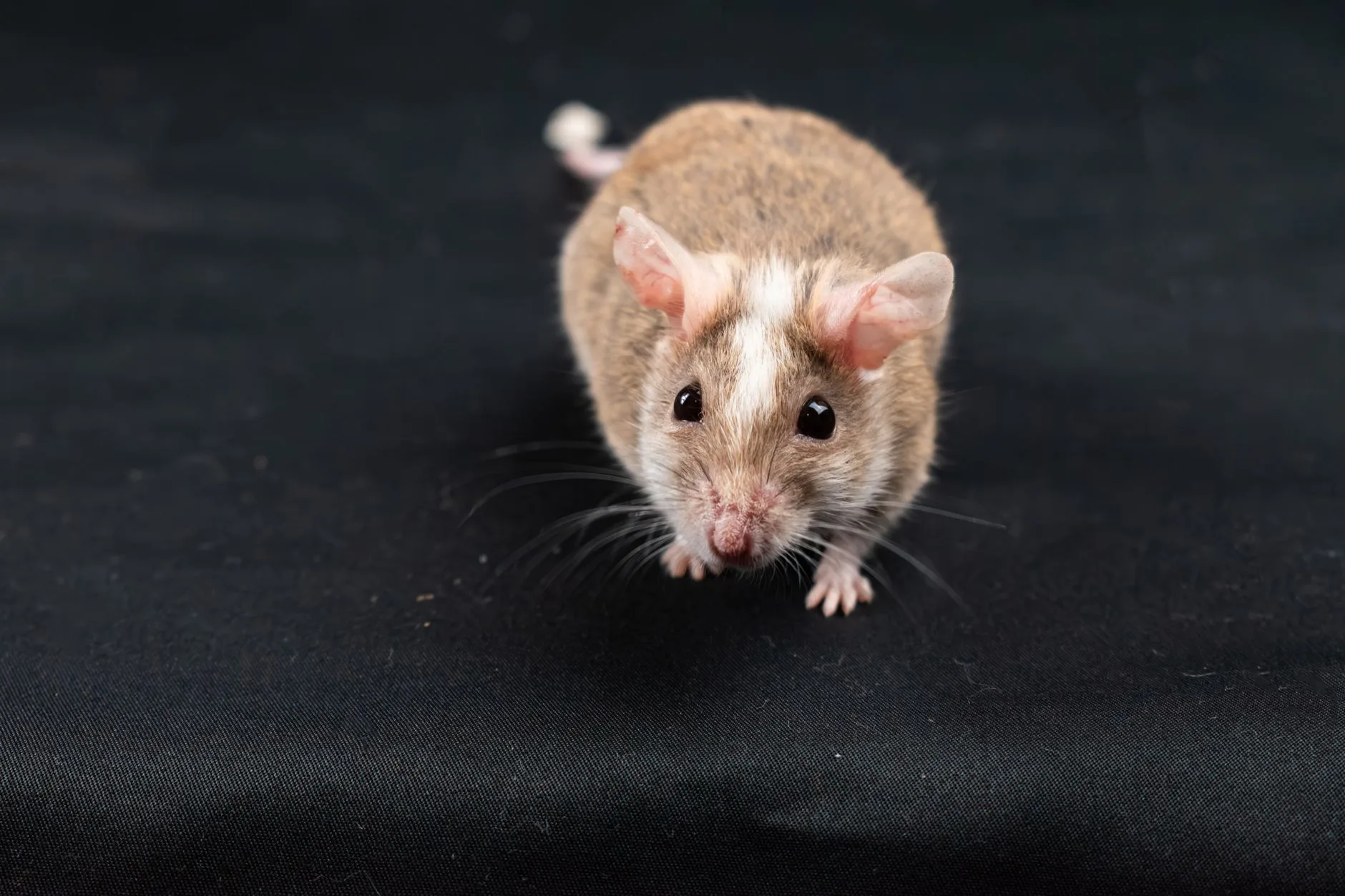
| Body length | 2.5–4 inches (not including tail) |
| Weight | 0.5–1 oz |
| Colour | Grey-brown back, cream or pale grey underside |
| Ears | Large relative to body, with fine hairs |
| Tail | Thin, scaly, as long as the body |
| Muzzle | Pointed |
| Droppings | Rod-shaped, pointed ends, 3–6mm - much smaller than rat droppings |
Signs of Mouse Infestation
- Droppings - the most common sign. Found along baseboards, inside drawers, behind appliances, in pantries, and in crawl spaces. Fresh droppings are dark and moist; older droppings are grey and crumbly.
- Gnaw marks - on food packaging, wood, insulation, and electrical wiring. Mouse incisor marks are small and irregular.
- Nests - shredded material (paper, insulation, fabric) found in undisturbed areas - inside appliances, behind wall insulation, in attic corners
- Noise at night - scratching and rustling in walls and ceilings after dark as mice become active
- Pet behaviour - cats and dogs may become agitated near walls, under furniture, or in front of appliances due to mouse scent
- Urine odour - a musty, ammonia-like odour in enclosed spaces indicates an active mouse population
How Mice Get Into Kent Homes
- Gaps around water pipes and gas lines where they enter through foundation walls
- Crawl space vent screens with damaged or missing mesh
- Gaps along the bottom plate of exterior walls
- Cracks in brick or concrete block foundations
- Door sweeps with worn rubber seals
- Gaps around cable and electrical conduit penetrations
DIY vs Professional Treatment
Snap traps - effective for small populations
Snap traps placed perpendicular to walls along active runways will catch mice. Use peanut butter as bait. Check daily. For a small, early-stage infestation with no confirmed nesting inside the structure, snap trapping combined with exclusion can resolve the problem.
Why exclusion is essential
Trapping without sealing entry points is temporary. New mice enter from outside as fast as trapped mice are removed. Professional exclusion identifies every gap at or below 6mm using a methodical structural assessment and seals each one with materials mice cannot chew through (galvanised steel mesh, hardware cloth, metal flashing). Guardian warrants all exclusion points for life.