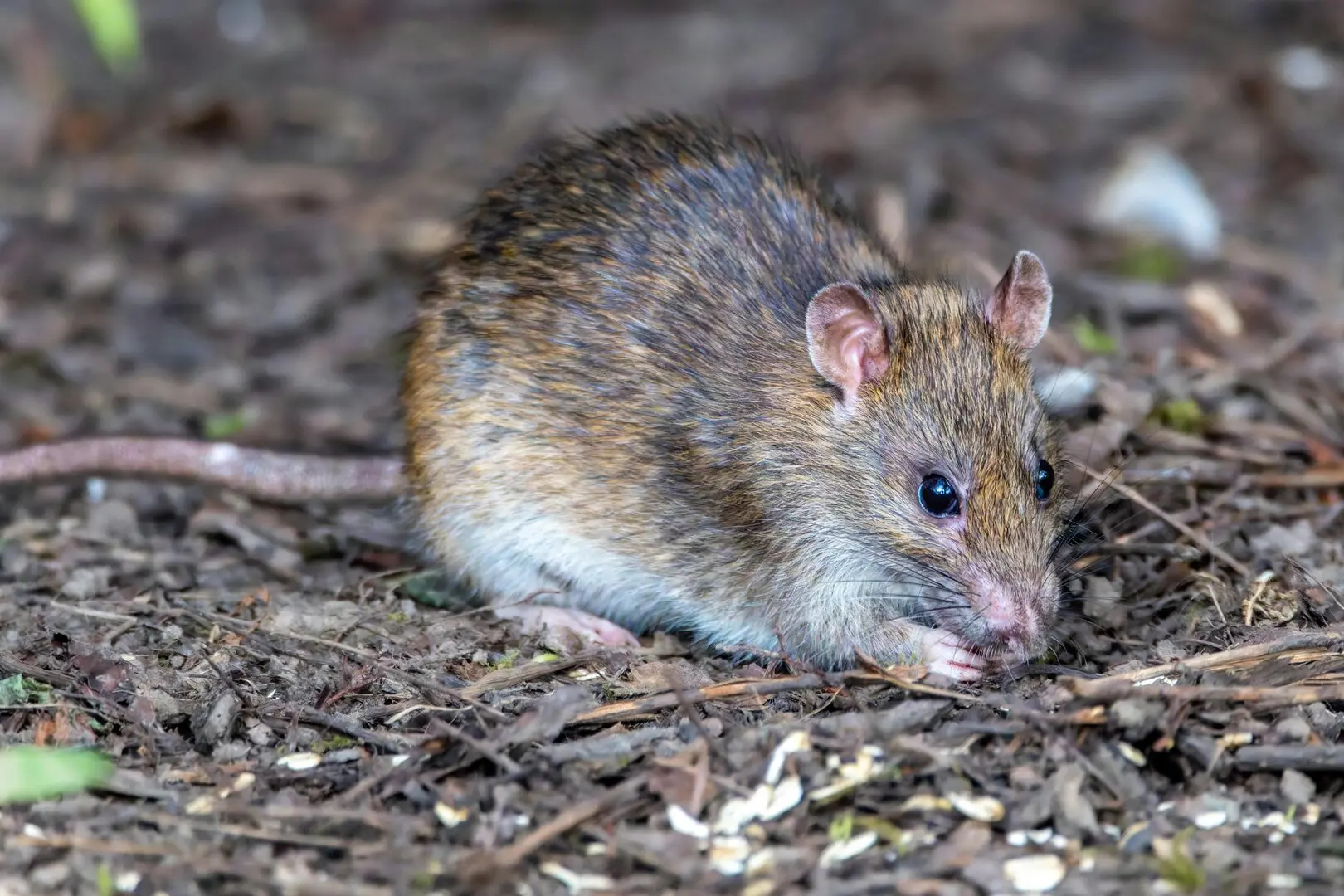
Norway Rat vs Roof Rat: A Different Problem Each Time
Norway Rat (Rattus norvegicus)
Norway rats are large - up to 400 grams - with blunt snouts, small ears, and a tail shorter than the body length. They are burrowers. Norway rat colonies establish under slabs, along foundations, in burrow systems beneath compost bins and wood piles, and in crawl spaces. They enter structures at ground level through foundation gaps as small as half an inch, under door thresholds, through utility pipe penetrations, and via open crawl space vents.
The Green River Valley’s soft riparian soil and the drainage corridors adjacent to residential areas in Kent provide ideal Norway rat burrowing habitat. Populations along the river corridor expand into residential properties, particularly in autumn. King County Public Health rodent control resources document the seasonal pressure patterns across the county.
Roof Rat (Rattus rattus)
Roof rats are slender, agile climbers with large ears, a pointed snout, and a tail longer than the body. They nest above ground - in attic insulation, within wall cavities accessed from above, in dense ornamental shrubs, and in ivy ground cover. Roof rats access structures via overhanging tree branches, utility lines, and roofline gaps as small as half an inch at the eave line.
Soos Creek’s dense tree canopy in eastern Kent and the older tree-lined streets of residential Kent provide roof rat travel corridors from green space directly to rooflines. Homes with overhanging branches within three feet of the roofline are at elevated roof rat risk.
Signs of Rat Activity
Droppings and Gnaw Marks
Rat droppings are 12 to 20 mm in length - larger than mouse droppings. Norway rat droppings are capsule-shaped; roof rat droppings are banana-shaped with pointed ends. Gnaw marks on structural wood, pipe insulation, and electrical wiring are consistent with rat activity. Fresh gnaw marks are light-coloured; older marks darken with oxidation.
Grease Runs and Burrow Signs
Grease runs - dark smear marks along walls, pipes, and beams - result from the oils in rat fur being deposited on surfaces they travel repeatedly. Norway rat burrow entrances are clean-edged holes approximately 5 to 8 cm in diameter, often with freshly excavated soil at the entrance. Finding active burrows along the foundation or under wood debris near the structure is a reliable Norway rat indicator.
Guardian’s Rat Control Process
Population Elimination by Trapping
Guardian uses snap trapping as the primary population elimination tool. Interior poison bait is not used in residential settings - a rat that consumes rodenticide inside the structure and dies in an inaccessible wall void or subfloor produces an extended odour problem lasting weeks. Trapping provides controlled, locatable carcass removal. WSU Extension and the EPA rodenticide guidance both support trapping as the preferred indoor method for this reason.
Exclusion with Galvanized Steel Mesh
All entry points identified during inspection are sealed with 19-gauge galvanized steel hardware cloth, steel wool embedded in caulk, or metal flashing - materials rats cannot chew through. Guardian seals foundation gaps, pipe penetrations, crawl space vent surrounds, and roofline gaps. Every sealed point is documented in the written service report. The lifetime warranty covers all Guardian-installed exclusion points.
Health Risks - Hantavirus and Salmonella
Norway and roof rats both carry pathogens transmissible to humans. Hantavirus is shed in rodent urine, droppings, and nesting material and can be inhaled during cleanup of contaminated crawl spaces. Salmonella contamination of food preparation surfaces through rat droppings is a documented health risk. Guardian technicians follow safe handling protocols and can coordinate with remediation services for heavily contaminated crawl spaces.
Mouse Control in Kent WA
Norway rat and house mouse infestations frequently co-occur in South King County properties - rats at foundation level, mice in wall cavities and kitchen areas. Where rat activity has been confirmed, a concurrent mouse inspection is recommended. Guardian’s mouse control in Kent uses snap trapping and exclusion sealing with the same lifetime warranty applied to all Guardian exclusion work.
Norway Rat Identification Guide
Norway rats and roof rats require different exclusion strategies - Norway rats burrow at foundation level while roof rats enter at roofline gaps and utility penetrations. Confirming the species before exclusion work begins prevents missed entry points and incomplete sealing. The Norway rat identification guide covers body size, tail-to-body ratio, muzzle shape, and burrow characteristics that distinguish Norway rats from roof rats in South King County.
What Our Customers Say
★★★★★
“Norway rats had been getting under the garage slab through a deteriorated concrete joint. Guardian identified every entry point, sealed with galvanised mesh, and set tamper-resistant bait stations on the exterior. No activity in three months.”
★★★★★
“Rats in the crawl space - we could hear them at night. Guardian did a full exclusion inspection, found three separate entry points along the foundation, and sealed them all. Snap traps cleared the remaining population inside. Clean result within three weeks.”
★★★★★
“Had a rat problem along our back fence line that kept coming back with previous providers. Guardian identified the burrow network, treated it properly, and sealed the gap under the garden gate they were using as a highway. Problem has not returned in six months.”