Stinging Insect Species in South King County
Correct species identification changes how the nest is treated. Nest location, construction material, and colony behaviour all differ by species. Guardian identifies the insect before any treatment begins.
Yellow Jackets (Vespula spp.)
Yellow jackets are the most common stinging insect call in Kent. They nest in the ground, in wall voids, and under eaves. Ground nests are the most dangerous - the entrance is easy to disturb accidentally while mowing or gardening. A colony can contain thousands of workers by late summer. The WSU Extension yellow jacket management guide outlines nest biology and treatment timing across Western Washington.
Bald-Faced Hornets (Dolichovespula maculata)
Bald-faced hornets build the large grey paper nests visible in trees, shrubs, and on the exterior of structures. They are technically yellow jackets but defend their nests aggressively at longer distances than other species. A nest the size of a basketball can contain 400 to 700 workers. Aerial nest treatment requires direct application to the entry point at dusk or dawn when activity is lowest.
Mud Daubers (Sceliphron spp.)
Mud daubers are solitary wasps that build small mud tubes on exterior walls, under overhangs, and inside garages. They rarely sting unless directly handled. Guardian removes mud dauber tubes and treats the surface to discourage re-nesting. They are generally less urgent than colonial species but become a nuisance when tubes multiply across a structure.
Paper Wasps (Polistes spp.)
Paper wasps build open comb nests - the umbrella-shaped structures often found under eaves, in attic vents, and behind shutters. They are less aggressive than yellow jackets but will sting if the nest is disturbed. Treatment is straightforward for accessible nests; vented or enclosed locations require careful approach to avoid driving wasps into the structure.
Honey Bees - Relocation, Not Extermination
Guardian does not exterminate honey bees. If you have a honey bee swarm or an established colony inside a wall void, we coordinate removal with a licensed local beekeeper. Honey bees are critical pollinators, and relocation is both ecologically responsible and, in many cases, more effective than chemical treatment for void colonies.
Nest Location Determines Treatment
Ground Nests
Ground-nesting yellow jackets require direct dust or liquid treatment into the nest entrance. Sealing the entrance without treating the colony forces wasps to chew through interior walls or flooring to escape. Guardian treats ground nests in the evening when foragers have returned and the colony is fully present inside the nest.
Aerial Nests
Aerial nests - hanging from tree branches, eaves, or roof overhangs - are treated with fast-acting aerosol or dust applied directly to the nest opening. The nest is removed after the colony is eliminated. Leaving an empty nest in place can attract new colonies the following spring.
Wall Void Nests
Wall void nests are the most difficult to treat. Yellow jackets chewing through a wall into a living space is a common emergency call in Kent. Treatment requires locating the entry point on the exterior, applying dust into the void, and then sealing the entry after the colony dies. Guardian provides written reports on every treatment so homeowners have a record of what was done and where.
Late Summer Aggression in Kent and Soos Creek
August and September bring the highest stinging incident rates across South King County. As the colony reaches maximum size and natural food sources begin declining, yellow jackets become scavengers - appearing at outdoor meals, garbage bins, and recycling containers. Soos Creek greenbelts and parks adjacent to residential areas in Kent create high foraging pressure near homes.
The EPA safe pest control guidance recommends professional removal for nests near occupied buildings or high-traffic areas. King County Public Health documents stinging insect incidents across the region seasonally.
Guardian’s Wasp Removal Process
The technician locates the nest and identifies the species. Treatment timing, product selection, and approach depend on nest type and location. After treatment, Guardian confirms colony elimination and removes accessible nests. A written report documents the nest location, species, treatment applied, and any structural recommendations. Our service includes follow-up inspection if activity is observed after initial treatment under our free re-service guarantee.
Same-day emergency appointments are available across Kent, Auburn, Renton, Federal Way, Burien, SeaTac, and Covington when an active nest presents an immediate risk to occupants.
Mosquito Control in Kent WA
Late summer brings peak yellow jacket activity and peak mosquito pressure to Kent yards at the same time. Both pests are active near the Soos Creek greenbelts and Green River waterways. Guardian’s mosquito control in Kent uses barrier spray and BTi larvicide to reduce the active adult population - bookable at the same time as wasp removal for a single yard treatment visit.
Yellow Jacket Identification Guide
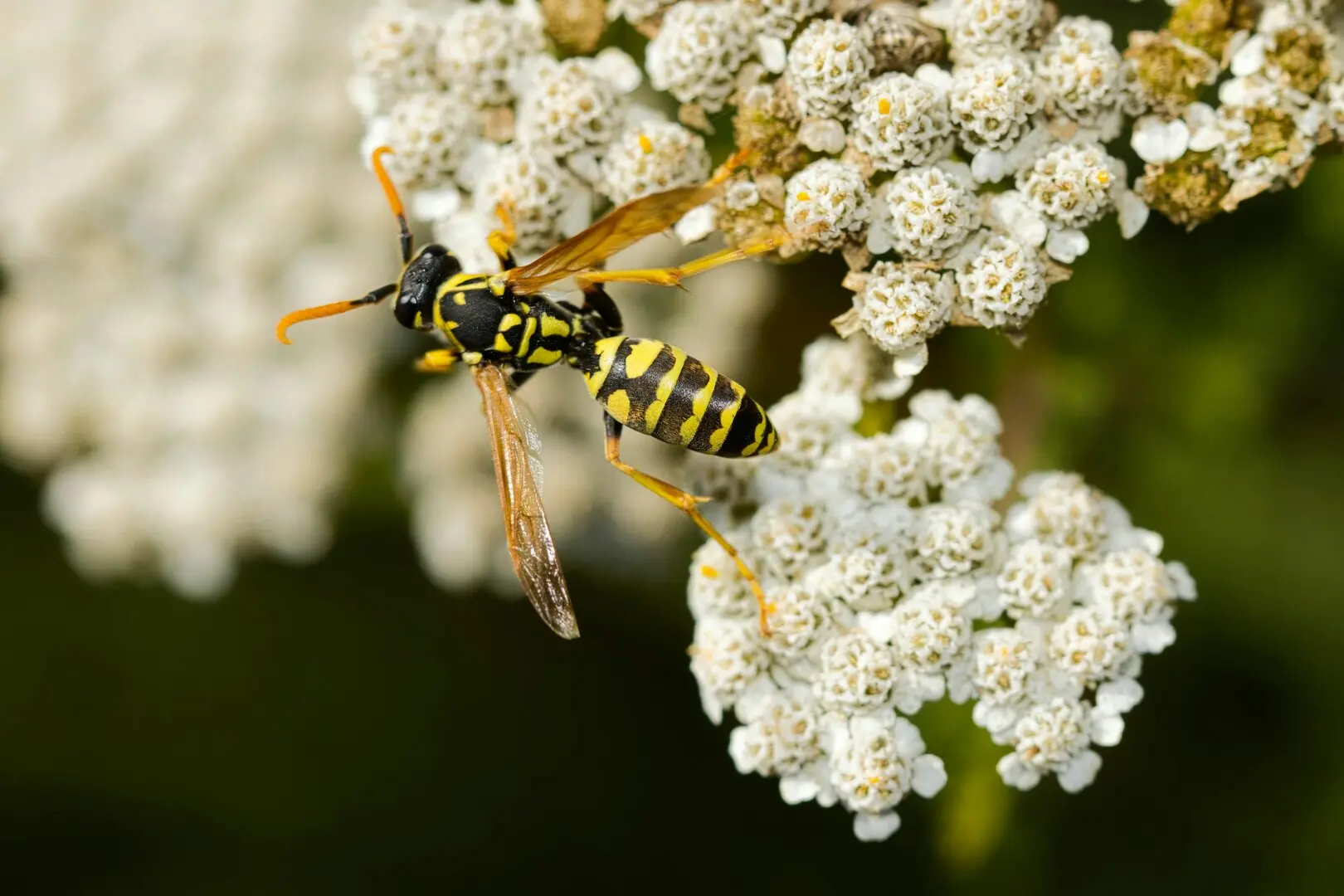
Yellow jackets are the most commonly encountered stinging insect in Kent and the most likely to sting unprovoked during late summer scavenging. Bald-faced hornets, paper wasps, and mud daubers are also present in South King County - and each species requires a different removal approach. The yellow jacket identification guide covers the banding pattern, nesting habits, and late-season behavioural changes that distinguish yellow jackets from other stinging insects in Western Washington.
What Our Customers Say
★★★★★
“Yellow jackets had nested in a void under our back deck steps. Couldn’t use the back garden at all. Guardian came out the next morning, removed the nest, treated the void, and applied a barrier to prevent rebuilding. Back to normal within 24 hours.”
★★★★★
“Bald-faced hornets built a large nest in our front eave. Guardian removed it safely and without drama - suited up, removed the nest, and treated the site in about 30 minutes. No stings, no fuss. Really professional.”
★★★★★
“Ground yellow jacket nest in the back lawn - my son got stung before we knew it was there. Guardian treated the nest that afternoon and it was inactive by the next morning. Fast response and completely effective.”