Identification
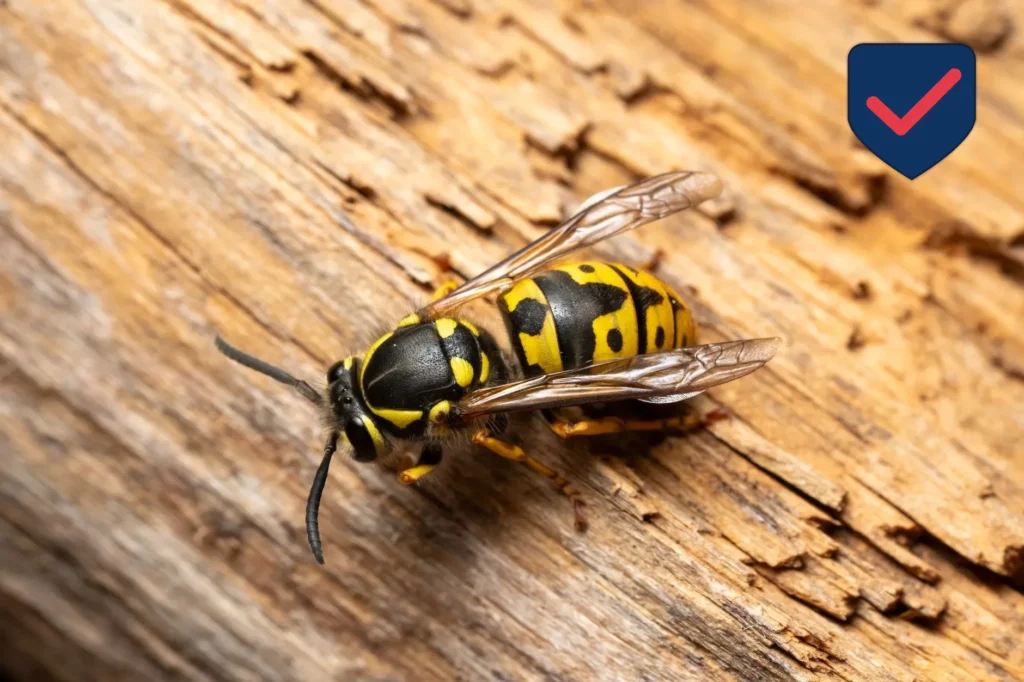
| Feature | Yellow Jacket | Bald-Faced Hornet |
|---|---|---|
| Size | 10–16mm | 15–20mm |
| Colour | Bright yellow and black banding | Black with white/ivory markings on face and abdomen |
| Body | Slender, smooth, wasp-waisted | Robust, smooth, wasp-waisted |
| Nest location | Ground burrows, wall voids, eaves, under decking | Trees, shrubs, overhangs, utility boxes |
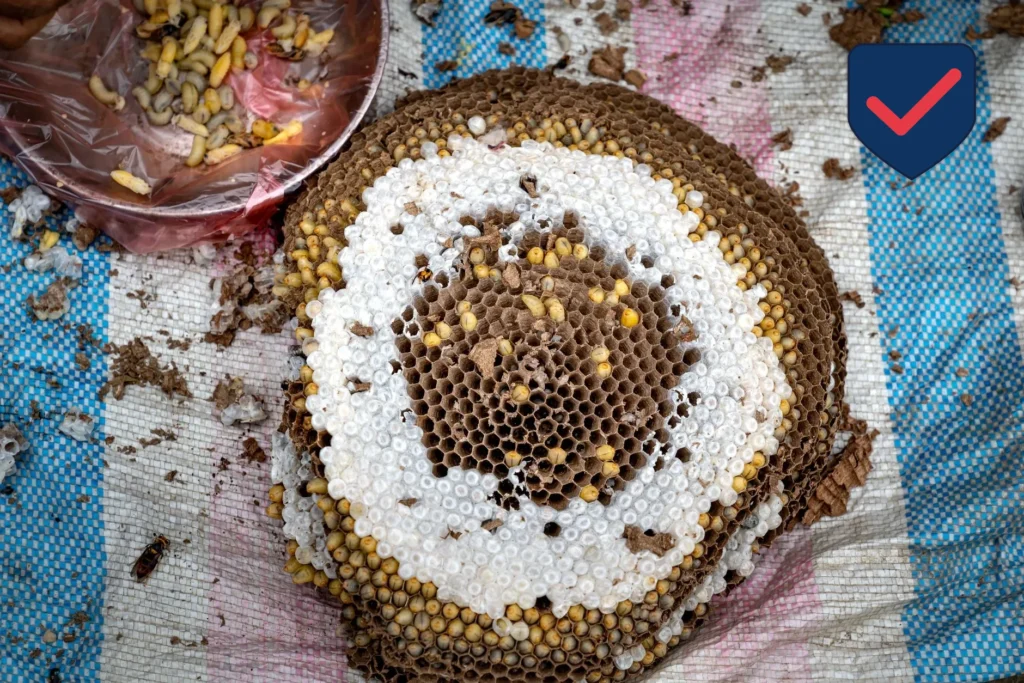
| Nest material | Grey papery pulp | Large grey papery football-shaped nest |
| Aggression | Very high - defend large perimeter | Very high - attack without direct provocation near nest |
When Yellow Jackets Are Most Dangerous in Kent WA
Disturbing a ground nest while mowing or gardening triggers a mass attack. Yellow jackets respond to vibration. If you see wasps boiling out of a ground opening, move away quickly in a straight line. Do not swat at individual wasps - this releases alarm pheromones.
Common Nest Locations in Kent Homes
- Ground burrows along foundation edges, in garden beds, and under lawn
- Wall voids - yellow jackets enter through gaps around window frames, siding, and utility penetrations
- Eaves and roof overhangs - small paper nests built in sheltered cavities
- Under decking and wooden steps
- Attic spaces - large colonies can establish in attic insulation
- Trees and shrubs (primarily bald-faced hornets)
DIY vs Professional Removal
Ground nests - approach with caution
A visible ground nest entry point can sometimes be treated at night with a professional-grade dust insecticide (deltamethrin or carbaryl). Wear protective clothing and do not use a torch - use a red-lens headlamp, which wasps cannot detect as easily. Do not seal the entry point before the colony is dead. Allow 48–72 hours for the dust to penetrate the colony before sealing.
When to call a professional
- Nest is inside a wall void, eave, or attic - improper treatment drives wasps through interior walls into living spaces
- Colony is very large (visible daily activity of hundreds of wasps)
- Anyone in the household is allergic to wasp stings
- Nest is near a doorway, play area, or high-traffic zone
- Ground nest location cannot be clearly identified