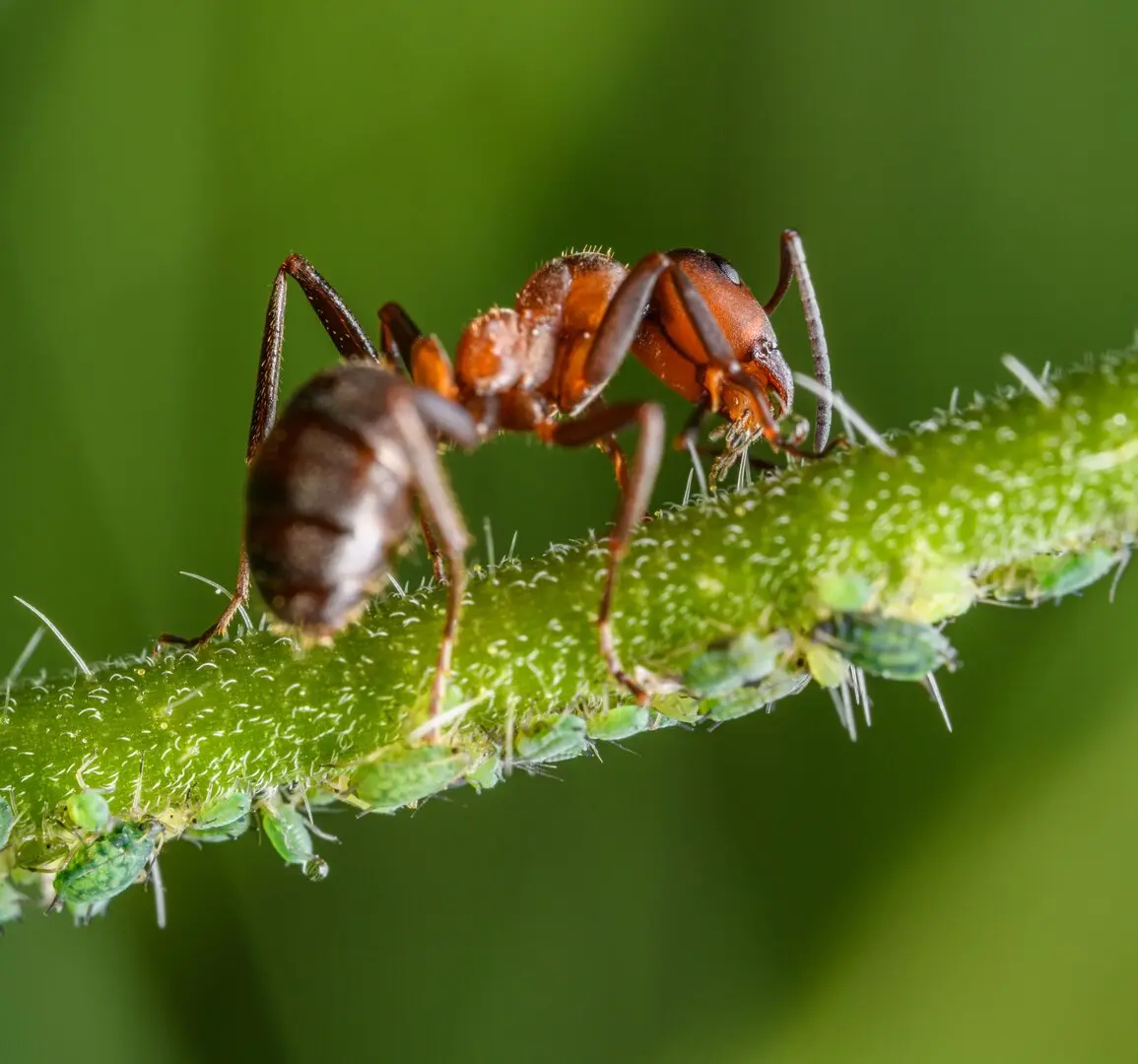
Why Species Identification Comes First
Every ant species behaves differently. The treatment that eliminates one species can make another worse. Spraying odorous house ants with a repellent product causes the colony to split - a process called budding - which turns one problem into several.
Odorous House Ants (Tapinoma sessile)
These are the small, dark ants that smell like rotten coconut when crushed. They are the most common ant species in Kent homes. They nest in wall voids, under flooring, and near moisture sources in kitchens and bathrooms.
Repellent sprays do not work on odorous house ants. Gel bait is the correct treatment. Workers carry the bait back to the colony and transfer it to reproductives, eliminating the source. Learn more about odorous house ant biology from the WSU Extension ant management guide.
Carpenter Ants (Camponotus spp.)
Carpenter ants are large - often 6 to 12 mm. They do not eat wood, but they excavate galleries through moist or moisture-damaged timber to build nests. Finding them indoors usually means there is a moisture problem nearby.
Carpenter ants often establish parent colonies outdoors and satellite colonies inside the structure. Both must be located and treated. The moisture-damaged wood they favour - window sills, rim joists, deck posts - needs to be identified and repaired to prevent reinfestation. The EPA ant control resource provides useful context on structural risk.
Pavement Ants (Tetramorium immigrans)
Pavement ants nest under concrete slabs, driveways, walkways, and garage floors. They enter homes through expansion joints and cracks in the slab. Treatment requires direct colony baiting at entry points and along foraging trails, not surface sprays.
Ant Pressure in Kent and the Green River Valley
Kent’s climate creates ideal ant habitat. The Green River Valley holds moisture through winter and spring. Soos Creek and its surrounding greenbelts provide constant foraging habitat adjacent to residential yards.
Ant colonies grow rapidly in spring as temperatures rise. Odorous house ants enter homes in large numbers when outdoor food sources are disrupted by rain. Carpenter ant swarms in April and May - when winged reproductives emerge - are often the first sign homeowners notice.
King County Public Health tracks pest-related public health concerns across the region. Guardian stays current with local pest pressure patterns to adjust treatment methods seasonally.
How Guardian Treats Ant Infestations
Inspection and Species Confirmation
The technician inspects entry points, foraging trails, and suspected nest sites. Species confirmation determines whether bait, exclusion, moisture remediation, or a combination is the right approach. No treatment begins until the species is confirmed.
Targeted Bait Placement
For odorous house ants, slow-acting gel bait is placed along active trails and near nest sites. The goal is secondary transfer - workers carry the bait to the queen and colony, not just to themselves. Fast-acting sprays kill workers on contact but do not reach the reproductives.
Satellite Colony Treatment
Carpenter ant satellite colonies inside the wall void must be treated directly. This may involve drilling and dusting into void spaces. The parent colony outdoors - often in a decaying stump or wood pile near the Soos Creek corridor - is treated separately.
Exclusion and Moisture Advice
Guardian notes moisture issues, wood-to-soil contact, and structural gaps that allow re-entry. We provide written service reports on every visit so homeowners know exactly what was found, treated, and recommended. Our insect control service includes follow-up guidance on reducing conditions that attract ants.
Service Area for Ant Control
Guardian treats ant infestations across Kent, Auburn, Renton, Federal Way, Burien, SeaTac, Covington, and surrounding South King County communities. Same-day and next-day inspections are available for active infestations.
Cockroach Control in Kent WA
Homes with established ant colonies often share the same harborage conditions - moisture, structural gaps, and food debris - that attract cockroaches. Where both pests are active, Guardian treats them in the same service visit. Our cockroach control in Kent uses gel bait targeted at harborage areas and an insect growth regulator to prevent re-establishment.
Carpenter Ant Identification Guide
Correctly identifying whether a large black ant is a carpenter ant, odorous house ant, or pavement ant changes the treatment method entirely. Carpenter ant control requires nest location and void injection - trail baiting alone will not reach the reproductive colony. The carpenter ant identification guide covers size, colouring, wing patterns, and the frass and gallery characteristics that distinguish carpenter ants from other species found in Kent homes. The odorous house ant identification guide covers the smaller, trail-forming species most commonly found in Kent kitchens and bathrooms.
What Our Customers Say
★★★★★
“Odorous house ants had been coming into our kitchen through a gap under the sliding door for two summers. Guardian baited the colony and sealed the entry point. Within ten days we had no ants at all. The spray treatments I’d tried before never worked because they never reached the nest.”
★★★★★
“Carpenter ants had been hollowing out a fence post near our deck. Guardian identified the satellite colony, treated it directly, and checked the main wood structures of the house for further activity. No damage had spread. Relieved they caught it early.”
★★★★★
“Pavement ants were coming in along the garage threshold every spring. Guardian baited the entry trail and treated the exterior crack they were using. Done in one visit with a follow-up to confirm. Targeted, not a blanket spray.”