Ants
Odorous House Ant
Peak: March–September
The most common ant complaint in Kent homes. Small (1–3 mm), dark brown to black. Identified by the rotten coconut smell when crushed. Colonies can reach 100,000+ workers and rapidly split if treated incorrectly with repellent sprays.
Carpenter Ant
Peak: April–August
Large (6–13 mm), typically black. Excavates galleries in moist or damaged timber - a structural concern in older Kent homes. Does not eat wood; leaves behind coarse sawdust-like frass near nest sites.
Rodents
Norway Rat
Peak: September–February
Heavy-bodied, blunt muzzle, tail shorter than body. The dominant rat species in Kent and South King County. Burrows along foundations and waterways. A disease vector carrying Leptospira, Salmonella, and Hantavirus.
House Mouse
Peak: October–March
Small (2.5–4 inches), grey-brown, large ears, thin tail. Enters through gaps as small as 6mm. Nests in insulation, behind appliances, and in wall voids. Produces up to 8 litters per year.
Stinging Insects
Yellow Jacket & Bald-Faced Hornet
Seasonal: June–October
The most aggressive stinging insects in Kent. Yellow jackets nest in ground burrows and wall voids. Bald-faced hornets build large grey paper nests in trees and overhangs. Both sting repeatedly when disturbed.
Spiders
Hobo Spider
Peak: August–October
A common funnel-web spider in the Pacific Northwest. Medium-sized, brown with chevron markings. Builds horizontal funnel webs in dark, undisturbed areas - basements, crawl spaces, behind appliances. Frequently misidentified as the brown recluse, which is not established in Western Washington.
Cockroaches
German Cockroach
Year-round (indoor pest)
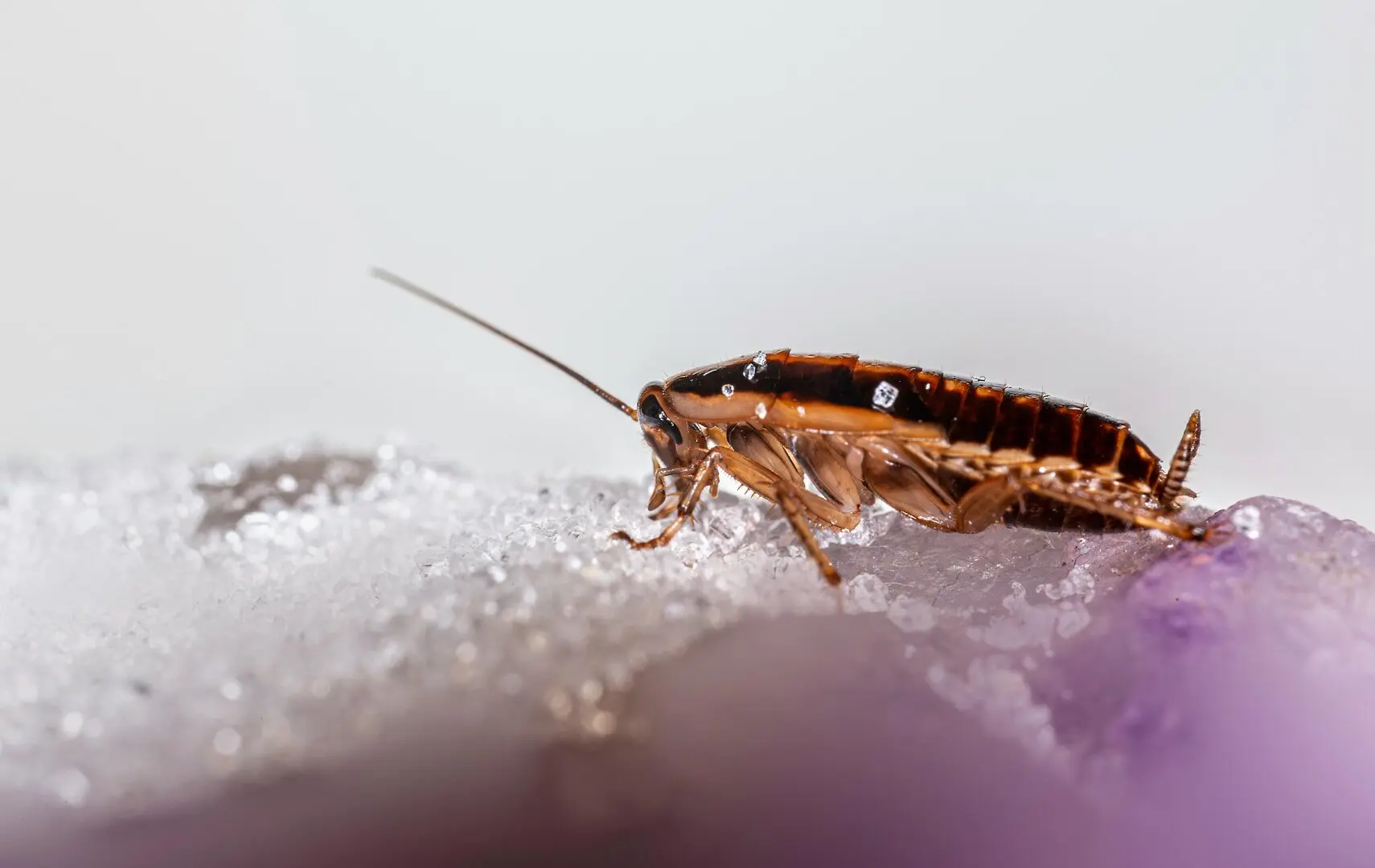
The most common cockroach in Kent residential and commercial kitchens. Small (1.3–1.6 cm), tan, two dark parallel stripes behind the head. Spreads via infested packaging. Triggers asthma and allergies. One of the most resilient pests to DIY treatment.
Bed Bugs
Bed Bug
Year-round (indoor pest)
Flat, oval, reddish-brown, apple seed-sized (5–7mm). Hides in mattress seams, box springs, bed frames, and behind electrical outlets. Signs include rust-coloured stains on bedding, shed skins, and clustered bites on exposed skin.
Termites
Subterranean Termite
Year-round · Swarms: February–April
The dominant termite species in Western Washington. Builds mud tubes to travel from soil to wood. Targets moist structural timber, sub-floor joists, and sill plates. Damage is often hidden for years. Swarmers (winged alates) appear February–April.
Fleas
Cat Flea
Peak: June–September
Infests both cats and dogs - and bites humans. Dark brown, laterally flattened, 1–2mm. Small red bites typically around the ankles. Flea eggs drop from pets onto flooring - the environment must be treated simultaneously with the pet for effective control.
Pest Identification FAQ
What pests are most common in Kent WA?
The most frequently reported pests in Kent and South King County are odorous house ants, Norway rats, house mice, yellow jackets, hobo spiders, German cockroaches, and bed bugs. Seasonal changes drive different pressures: ant and wasp activity peaks in summer, rodents move indoors through autumn, cockroaches remain active year-round in heated buildings.
Do I need a professional or can I treat it myself?
DIY treatment works for minor, single-species infestations caught early - a handful of ants, one visible wasp nest. It is not sufficient for rodent infestations (exclusion requires structural repairs), bed bugs (harborage sites require professional-grade treatment), established German cockroach infestations, or carpenter ant colonies with satellite nests.
What does a Guardian free estimate include?
A licensed Guardian technician inspects the attic, crawl space, exterior perimeter, and interior hot spots. The inspection is free. You receive a written report with findings and a treatment recommendation. No obligation to book.