What Does a Norway Rat Look Like?
| Feature | Norway Rat |
|---|---|
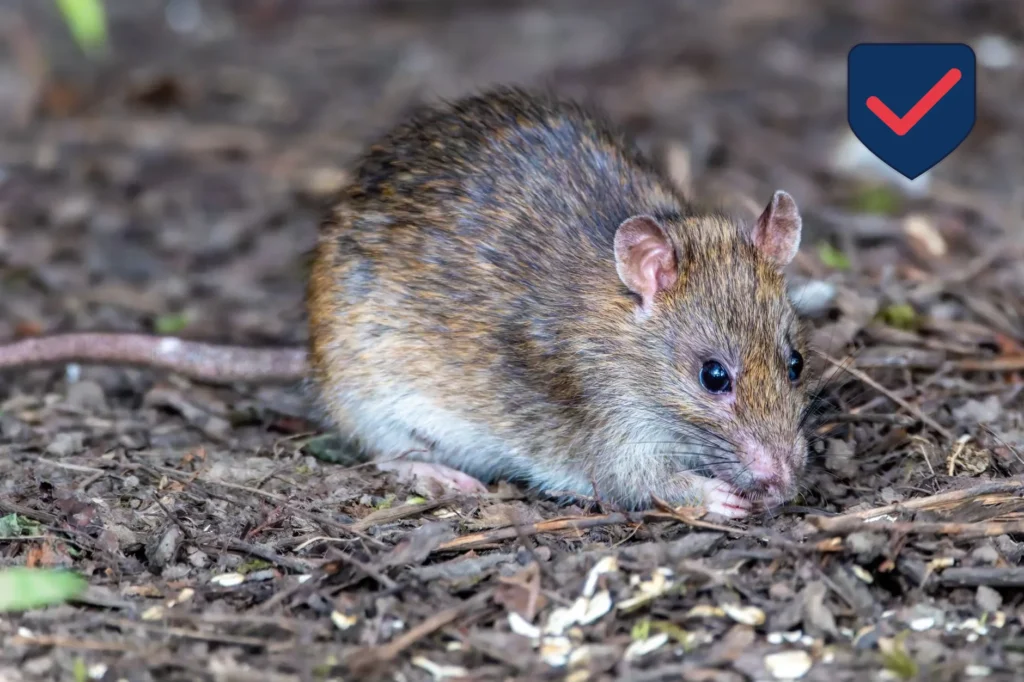
| Body length | 7–9.5 inches (not including tail) |
| Weight | 7–18 oz - noticeably heavy compared to mice |
| Colour | Coarse brown or grey fur, pale underside |
| Muzzle | Blunt and rounded |
| Ears | Small, close to the head |
| Tail | Scaly, bicoloured, shorter than the combined head and body length |
| Eyes | Small, dark |
| Droppings | Capsule-shaped, 18–20mm long |
Norway Rat vs Roof Rat - How to Tell the Difference
| Feature | Norway Rat | Roof Rat |
|---|---|---|
| Body build | Heavy, stocky | Slender, agile |
| Muzzle | Blunt | Pointed |
| Ears | Small, do not reach eyes when pulled forward | Large, reach eyes when pulled forward |
| Tail | Shorter than body | Longer than body |
| Nesting | Burrows in soil, ground level | Climbs - nests in attics, trees, upper walls |
| Common in Kent | Very common - dominant species | Less common than Norway rat |
Signs of Norway Rat Infestation
- Droppings - capsule-shaped, 18–20mm, found along baseboards, behind appliances, under sinks, in crawl spaces, and near food storage
- Burrows - smooth-edged holes 5–7cm diameter along foundation walls, under slabs, in compost heaps, and beneath decking
- Gnaw marks - on wood, plastic pipes, electrical wiring insulation, food packaging. Norway rats have hard incisors and can gnaw through soft metal and concrete block.
- Grease marks (rub marks) - dark smear marks along wall surfaces where rats travel consistently - their fur leaves oil and dirt on surfaces
- Noise - scratching, gnawing, and thumping in crawl spaces and wall voids, predominantly at night
- Footprints - visible in dusty areas of crawl spaces and attics - four-toed front feet, five-toed hind feet
Do not handle rat droppings without protection. Norway rat droppings and urine can transmit Hantavirus through airborne particles when disturbed. Wear an N95 mask and disposable gloves. Wet droppings with a bleach-water solution before removal. If the infestation is extensive, call a professional for remediation.
Health Risks Associated with Norway Rats in Kent WA
- Leptospirosis - spread through rat urine contaminating water or soil. Can cause kidney and liver failure in humans.
- Salmonellosis - spread through contaminated food and surfaces. King County Public Health tracks Salmonella outbreaks linked to rodent activity.
- Hantavirus Pulmonary Syndrome - spread through inhalation of airborne particles from droppings, urine, and nesting material. Rare but serious.
- Rat bite fever - transmitted through bites or contact with contaminated surfaces.
DIY vs Professional Treatment
What works short-term
Snap traps (Victor or similar) placed along active runways can reduce the population. Use food bait (peanut butter, nesting material). Place traps perpendicular to the wall with the trigger end touching the surface. Check daily.
Why exclusion is essential
Trapping without exclusion does not resolve a Norway rat infestation. The home or building remains accessible to new rats from outside burrow networks. Every entry point - pipes, utility penetrations, gaps in the foundation, crawl space vents - must be sealed with professional-grade materials (galvanised steel mesh, hardware cloth, metal flashing). Guardian’s exclusion work is warranted for life.