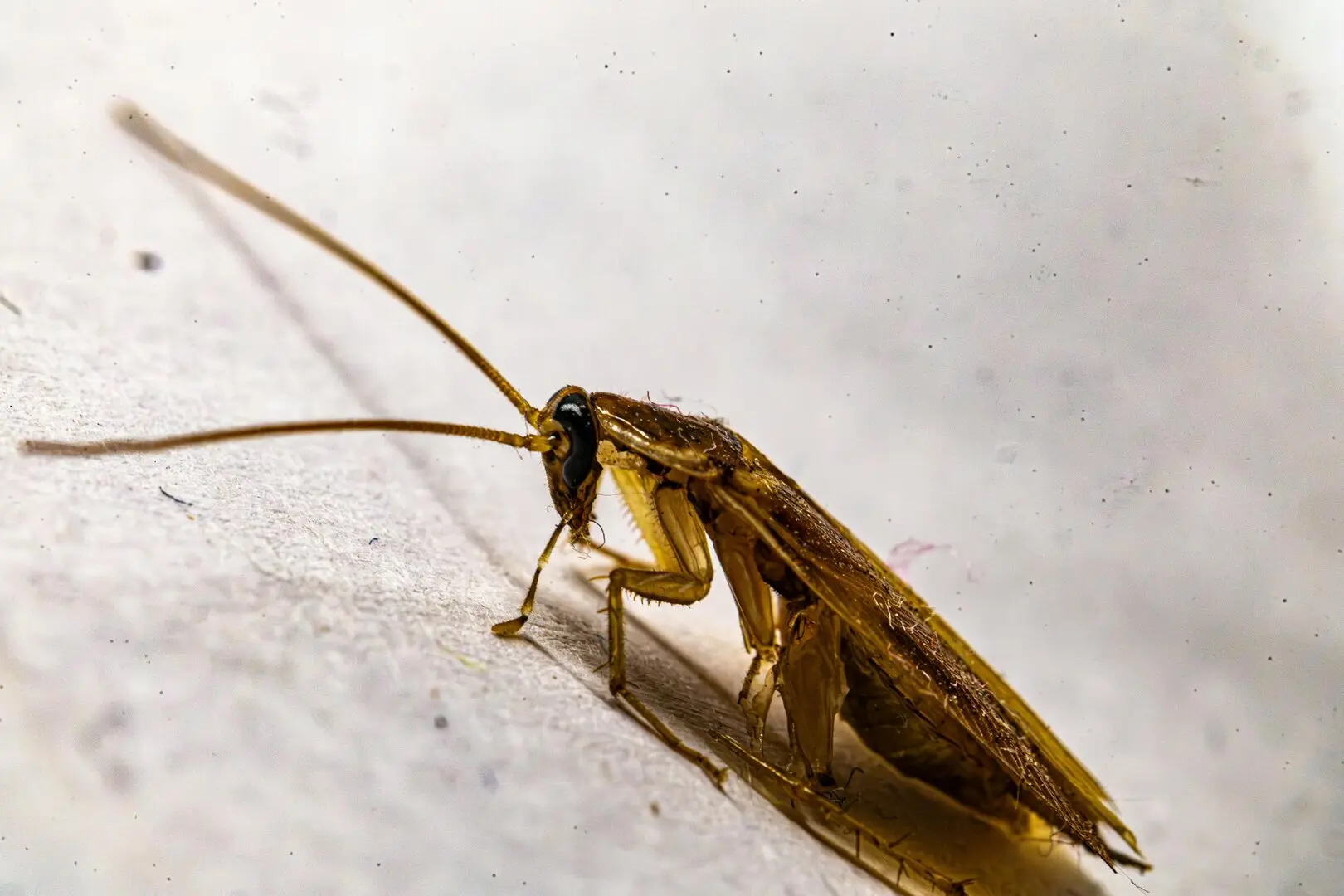
Why German Cockroaches Are So Difficult to Eliminate
German Cockroaches (Blattella germanica) are the most prolific and damaging commercial cockroach species. Understanding their biology is essential to understanding why standard spray treatments consistently fail against them.
Rapid Reproduction Overwhelms Spray-Only Programmes
A single female German Cockroach produces an egg case (ootheca) containing up to 48 eggs. She can produce up to 8 egg cases in a lifetime. Eggs hatch inside the wall void or equipment harbourage - not in the open where spray treatments make contact. WSU Extension pest management data confirms that populations can double within weeks under favourable conditions. A spray applied on the surface of cabinets does not penetrate the harbourage where breeding occurs.
Spray Treatments Scatter, Not Eliminate
Contact insecticide sprays have a repellent effect on cockroaches. Rather than killing the population, a spray visit causes cockroaches to disperse deeper into wall voids and into adjacent areas. Once the chemical dissipates - typically within days - the population re-emerges and the infestation expands. Repeated spray-only treatments create selection pressure that accelerates pesticide resistance in surviving populations.
Harbourage Sites Are Inaccessible to Sprays
German Cockroaches prefer to harborage in cracks and voids 3–6mm wide - behind refrigerator compressors, inside motor housings, beneath the inner panels of dishwashers, inside wall voids adjacent to pipes, and under kitchen equipment. These sites are physically unreachable by spray application. Gel bait placed at harbourage entrances is consumed by cockroaches inside the void and carried back to the nest, eliminating the population at its source.
Guardian’s Commercial Cockroach Elimination Programme
Guardian’s cockroach programme is built around three active components: gel bait at harbourage sites, insect growth regulators to break the breeding cycle, and pheromone monitoring to confirm elimination and detect re-infestation early.
Targeted Gel Bait Application
We apply small, precise gel bait placements inside cabinets, under equipment, along wall-floor junctions, and in void spaces where cockroaches are active. Gel bait is ingested directly and also transferred to other cockroaches via coprophagy - a feeding behaviour in which cockroaches consume each other’s faeces. This secondary transfer kills cockroaches that never directly contact the bait. The EPA recognises gel bait as the most effective cockroach control method in food-handling environments.
Insect Growth Regulators Break the Breeding Cycle
Insect growth regulators (IGRs) are synthetic compounds that mimic juvenile cockroach hormones. When consumed or contacted, they prevent nymphs from maturing into reproductive adults. IGRs are applied in conjunction with gel bait to ensure that cockroaches hatching from egg cases after the initial treatment cannot contribute to the next generation. This breaks the reproduction cycle that makes German Cockroach infestations self-sustaining.
American Cockroaches in Drain Systems
American Cockroaches (Periplaneta americana) enter commercial facilities primarily through floor drain systems connected to sewer infrastructure. They are much larger than German Cockroaches and prefer moist, dark environments. Guardian inspects floor drains and sump areas as part of every cockroach assessment. Drain-specific treatment and drain screen installation prevent sewer cockroaches from accessing the facility interior.
Pheromone Monitoring and Follow-Up
We install pheromone monitoring traps in known harbourage areas following treatment. Trap captures are recorded and mapped at every follow-up visit. Declining trap counts confirm that the population is collapsing. Zero captures over successive visits confirm elimination. This monitoring system also detects re-introduction early - before a new population establishes - and triggers a free re-service visit under Guardian’s guarantee.
Documentation for Health Department Compliance
Every Guardian cockroach treatment visit generates a written service record. For food service and healthcare clients, these records document: cockroach species identified, harbourage locations treated, products applied (with EPA registration numbers), and follow-up monitoring results. The King County Health Department expects active cockroach management programmes with supporting documentation from food service facilities. Guardian’s records are formatted to satisfy those requirements.
What Our Customers Say
★★★★★
“We’d been using a spray-only service for two years and the cockroaches kept coming back. Guardian switched us to a gel bait and IGR programme. Within four visits the population was gone. The pheromone monitoring traps confirmed it. Wish we’d made the switch sooner.”
★★★★★
“German cockroach infestation in our food commissary - a serious health and compliance issue. Guardian treated the harbourage sites inside all the equipment and followed up every two weeks. Three treatment visits and the infestation was eliminated. Clean inspection results since.”
★★★★★
“We had American cockroaches coming up through the floor drains in our prep kitchen. Guardian installed drain screens and treated the sewer entry points specifically. The drain-specific treatment was something our previous provider had never even suggested. Problem solved.”