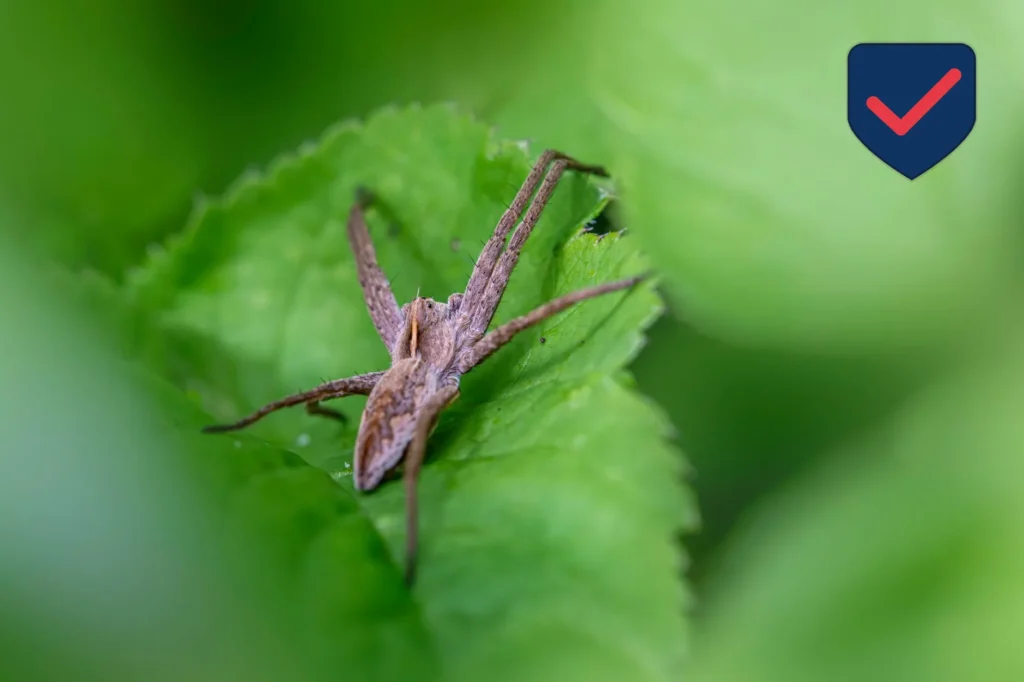
The hobo spider (Eratigena agrestis) is a common funnel-web spider found throughout Western Washington and South King County. It is frequently encountered in basements, crawl spaces, garages, and around the perimeter of homes during late summer and autumn. Hobo spiders are often misidentified as the brown recluse, which is not established in Western Washington.
Larger than hobo, darker, abdomen blotchy not chevron - same funnel web
Brown Recluse (Loxosceles reclusa)
Not established in WA
Violin-shaped marking on cephalothorax, six eyes in pairs
When Are Hobo Spiders Active?
Hobo spiders are active year-round but most visible August through October, when adult males leave their funnel webs to wander in search of mates. This is when they are most commonly encountered inside homes - crossing floors, found in bathtubs (they fall in and cannot climb out), and discovered in garages and basements.
How to Reduce Hobo Spider Activity
Reduce clutter at ground level in garages, crawl spaces, and storage areas - hobo spiders need undisturbed areas to build funnel webs
Sticky traps along baseboards catch wandering males effectively
Seal entry points - same exclusion measures that reduce rodent and insect entry also reduce spider entry
Treat the prey base - spiders follow their food. Reducing insect populations inside the home is the most effective long-term spider control strategy.
Exterior perimeter treatment - residual insecticide applied to the perimeter kills insects before they enter, which reduces the prey base that sustains spiders indoors
Seeing This Pest? Get a Same-Day Estimate.
Guardian's WSDA-licensed technicians identify and eliminate the pest — not just the symptoms. Serving Kent and South King County.