What Do Subterranean Termites Look Like?
| Caste | Appearance | Function |
|---|---|---|
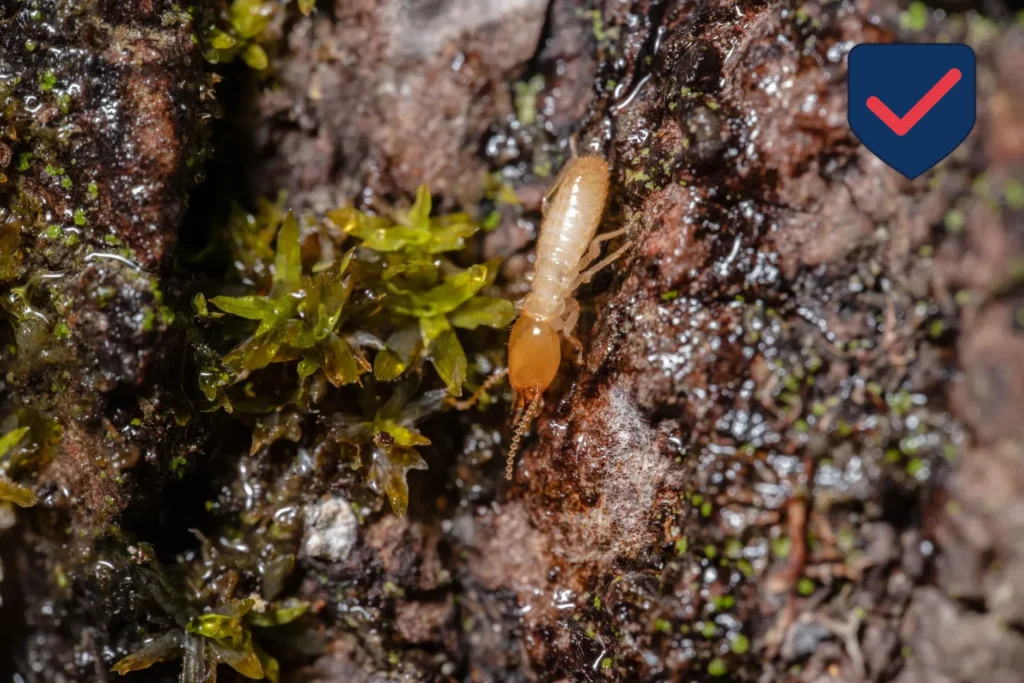
| Workers | 6mm, creamy white, no wings, soft-bodied - rarely seen outside galleries | Forage for wood, feed the colony |
| Soldiers | 6–7mm, white body with large rectangular orange-brown head and large mandibles | Defend the colony - found when wood is broken open |
| Swarmers (alates) | 8–10mm including wings, dark brown to black body, four equal-length wings, straight antennae | Reproduce - seen only during spring swarm season |
Termite Swarmers vs Carpenter Ant Swarmers
| Feature | Termite Swarmer | Carpenter Ant Swarmer |
|---|---|---|
| Antennae | Straight, bead-like | Elbowed (bent at a joint) |
| Waist | Broad - no pinch between thorax and abdomen | Distinctly pinched waist |
| Wings | All four wings equal length | Hind wings shorter than forewings |
| Wing shedding | Wings detach easily after landing - piles of wings near windows common | Wings do not detach |
| Body colour | Dark brown to black (swarmers only) | Black or black with reddish thorax |
Signs of Subterranean Termite Infestation
- Mud tubes - the most reliable sign. Pencil-width tubes of mud and wood particles running up foundation walls, pier blocks, and crawl space framing. Used to maintain moisture while foraging above ground. Breaking a tube and returning in 48 hours - if the tube is repaired, the colony is active.
- Swarmer activity - finding large numbers of winged insects (or discarded wings in piles) near windows, sliding glass doors, or light fixtures in March through May indicates a mature colony nearby or inside the structure
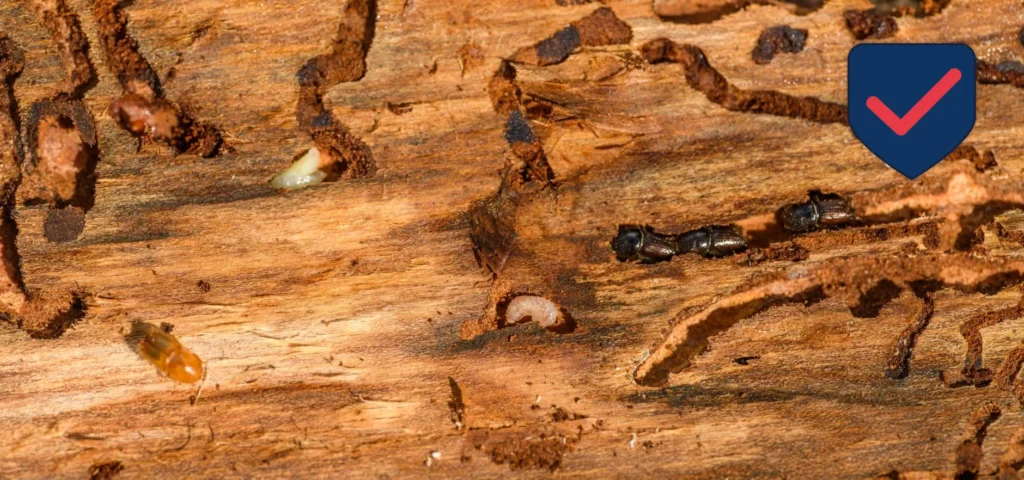
- Hollow-sounding wood - tap structural members in the crawl space, sill plate, and floor joists. A dull, hollow sound indicates galleries have been excavated inside.
- Sagging floors or door frames that stick - in advanced infestations, floor joists weakened by termite damage can cause floors to feel soft or springy and doors to bind in their frames
- Wood-to-soil contact points - deck posts, fence posts, and porch steps in direct contact with soil are entry points. Inspect these annually.
High-Risk Conditions in Kent Homes
- Crawl spaces with poor vapour barriers - subterranean termites require soil moisture and thrive in damp crawl spaces
- Homes built before 1980 with wood siding close to grade
- Deck ledger boards and stair stringers in direct contact with soil
- Wood debris left under or around the foundation - firewood stacked against the house, old form boards, tree stumps
- Dense mulch or garden bed material against foundation walls
- Failed or missing crawl space ventilation allowing moisture accumulation in framing
Termite Season in Kent WA
Subterranean termites are active year-round at the colony level but swarm in late winter and spring - typically February through May in South King County. Swarms are triggered by warm, humid weather following rain. Seeing swarmers does not mean your structure is infested - swarmers fly from the ground colony and may have originated from a neighbour’s property or garden area. However, swarmers found inside a structure strongly suggest the colony is accessing wood within the building.
Treatment Options
Liquid barrier treatment (termiticide)
A continuous chemical barrier is injected into the soil around the foundation and under any concrete slabs. The active ingredient (typically bifenthrin or fipronil) is taken up by foraging workers and transferred through the colony. This is the most common treatment for established infestations.
Termite bait stations
Bait stations are installed at intervals around the perimeter. Workers discover the bait, consume it, and carry it back to the colony. Effective at eliminating the colony but slower than liquid treatment. Better suited to prevention and monitoring, or properties where soil injection is difficult (solid concrete surrounds).
Why professional treatment is required
There are no effective consumer-grade termite treatments. Subterranean termites are underground - they cannot be treated with surface-applied products. Liquid barrier treatment requires a licensed applicator with the correct equipment to achieve the soil injection volumes required for a continuous barrier. WSDA licensing is required for termite work in Washington State.