Key Takeaways
- Washington State’s mild winters mean no pest species is truly absent during any month of the year.
- Ant season in Kent, WA peaks April–July; treatment before April prevents the spring flush indoors.
- Wasp colonies reach maximum size and maximum aggression in late August and September.
- Rodent entry season peaks September–November but Norway rats enter homes year-round.
- Mosquito pressure in the Green River Valley corridor concentrates in June and July.
- Quarterly treatment (4 visits/year) is the standard programme for South King County homes.
- Winter pest control targets overwintering queens before spring breeding begins.
Why Washington State Has Year-Round Pest Pressure
Most pest species require temperatures above 50°F (10°C) to remain active. The average daily low temperature in Kent, WA drops below 35°F for only 10–15 days per year according to NOAA historical records - compared to 90–120 days for inland cities like Spokane. This means the biological suppression that eliminates surface pest activity in colder climates barely occurs in the Puget Sound lowland zone.
Additionally, western Washington’s high annual rainfall (38–42 inches in Kent) maintains soil moisture, supports the fungal food chains that ant colonies depend on, and creates standing water that supports mosquito breeding from March through October. The Green River Valley corridor specifically - where Kent sits - captures additional moisture from the river system and the surrounding hillsides, making it a consistently pest-favourable environment.
Month-by-Month Pest Activity in Kent, WA
| Month | Primary pest pressures | Action priority |
|---|---|---|
| January | Rodents (indoor), cockroaches, overwintering spiders | Rodent bait monitoring, seal entry points |
| February | Rodents, spiders, cockroaches, early ant scouts | Rodent monitoring, perimeter inspection |
| March | Ants (trailing begins), carpenter ants (swarmers) | Spring perimeter treatment, crawl space check |
| April | Ants (peak begins), carpenter ant swarmers, wasp queens emerge | Ant barrier treatment, nest search |
| May | Ants (peak), wasps (young colonies), mosquitoes (early) | Full ant treatment, wasp nest inspection |
| June | Ants, wasps, mosquitoes, yellow jackets begin | Wasp nest treatment before colonies grow large |
| July | Wasps, yellow jackets, mosquitoes, ants declining | Wasp colony treatment, mosquito breeding sites |
| August | Wasps (peak aggression), yellow jackets, mosquitoes | Emergency wasp removal, mosquito barrier |
| September | Wasps (most aggressive), rodents entering, spiders | Wasp nest removal, rodent exclusion check |
| October | Rodents (peak entry), spiders, overwintering beetles | Rodent exclusion, perimeter treatment |
| November | Rodents, cockroaches, overwintering spiders | Rodent bait stations, indoor inspection |
| December | Rodents, cockroaches, indoor ant colonies | Winter monitoring, rodent bait replenishment |
Spring (March–May): Ant Season Begins
The spring pest flush and why timing matters
Ant colonies in Kent, WA resume foraging when soil temperatures reach 50°F - typically in late March in the Green River Valley area. Odorous house ants (Tapinoma sessile), the most common indoor ant species in South King County, begin sending foraging trails indoors through foundation gaps, expansion joints, and utility penetrations as workers seek carbohydrates after winter colony dormancy.
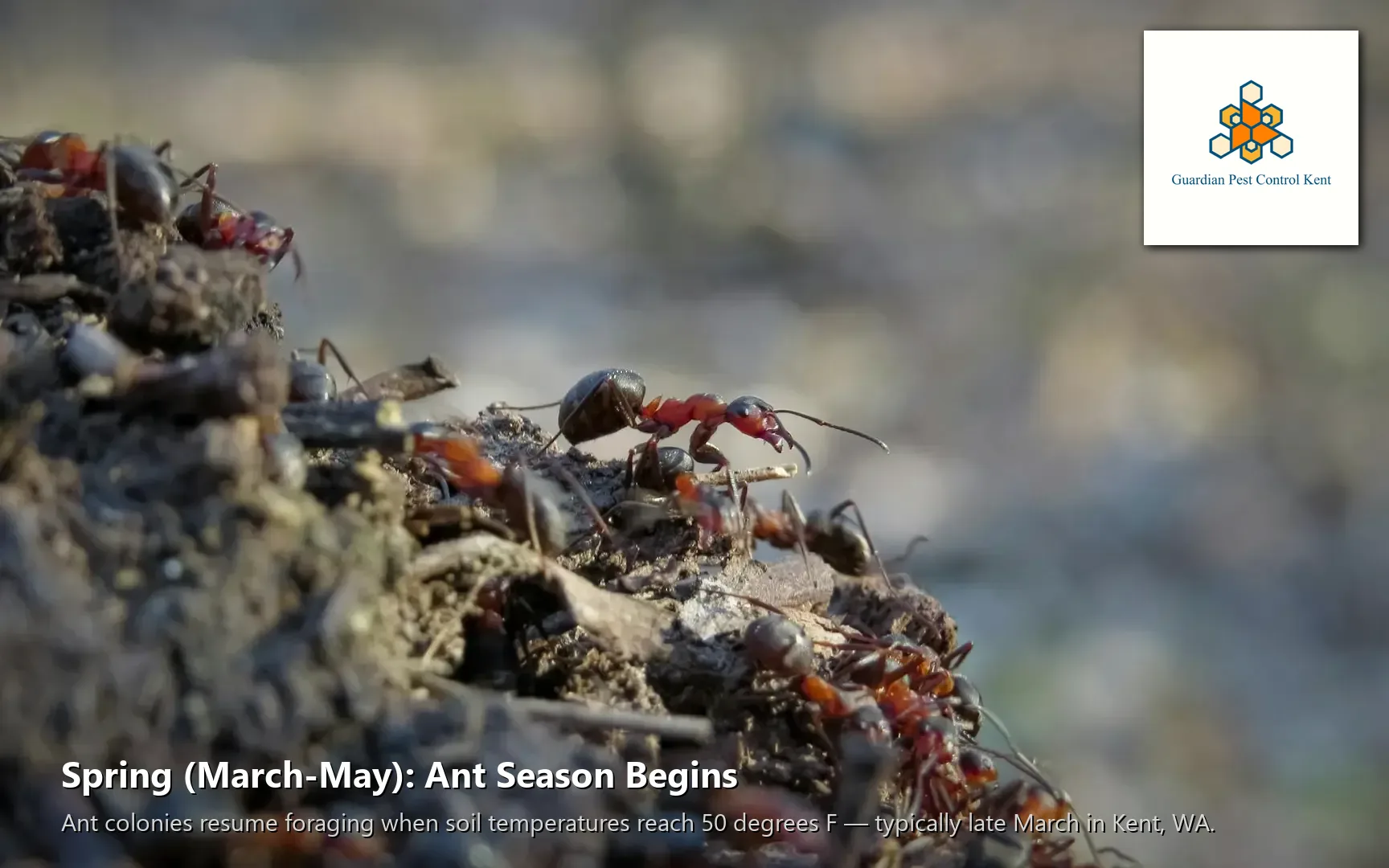
Carpenter ant swarmers - the winged reproductive forms - emerge from April through June. Swarmers indoors indicate an established satellite colony inside the building structure, not simply foraging workers entering from outside. An indoor carpenter ant swarmer event requires a structural inspection to locate the nesting gallery.
March and early April are the optimal treatment window. Applying a residual perimeter barrier before soil temperatures exceed 55°F catches workers at the foundation line before colony expansion pushes workers deeper into the interior. Treating in May or June after trailing has been established indoors requires more intensive indoor treatment and takes longer to reduce activity.
Related services: Ant Control Kent WA
Summer (June–August): Wasps, Yellow Jackets, and Mosquitoes Peak
Wasp colony growth timeline
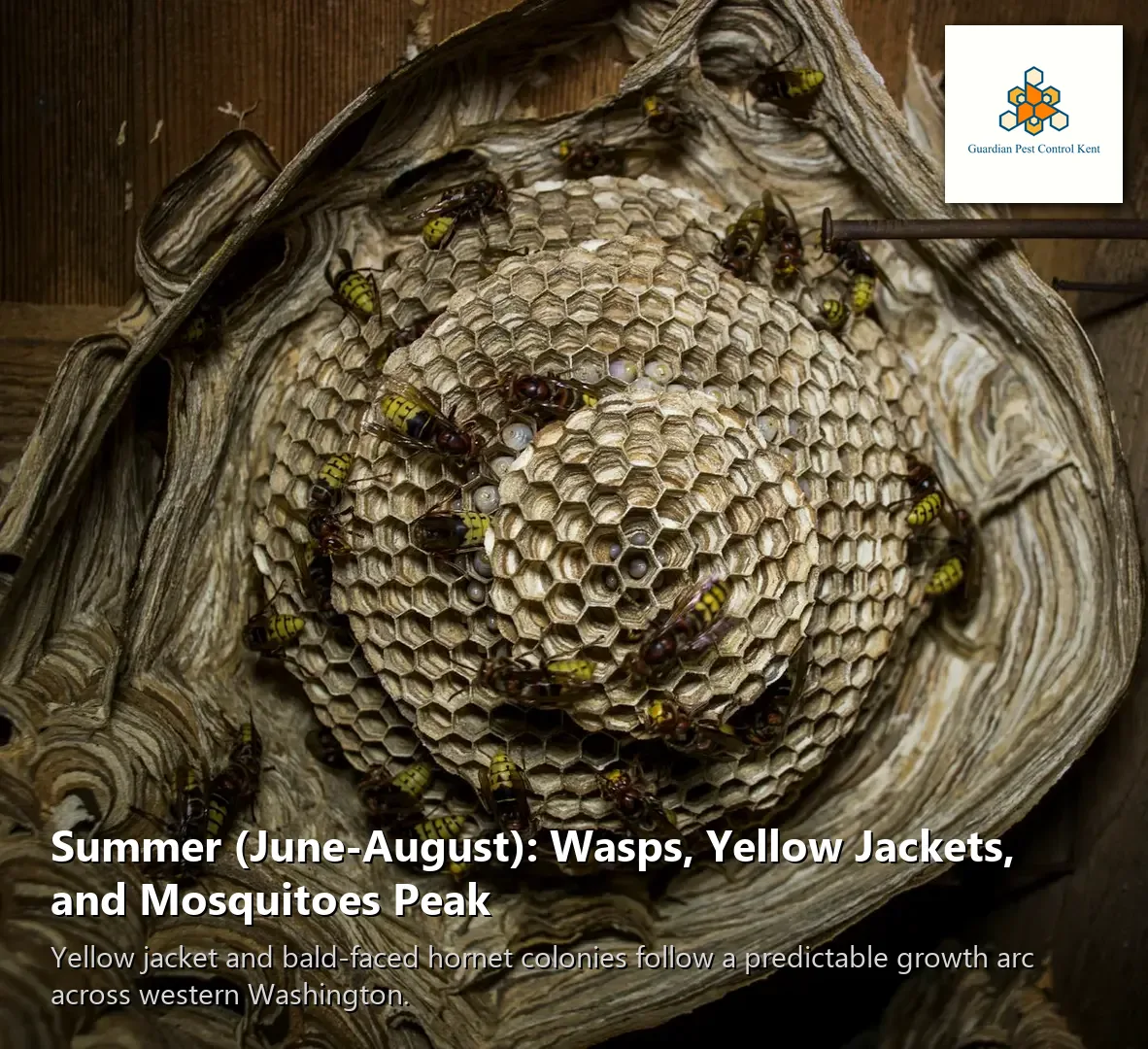
Yellow jacket and bald-faced hornet colonies in western Washington follow a predictable growth arc. Queen wasps emerge from winter hibernation in April to begin new colonies. A single queen produces 30–40 workers by late May, 200–400 workers by July, and 3,000–5,000 workers by late August. The practical implication for Kent homeowners: a nest found in June requires a single treatment and poses limited risk; the same nest found in September is 10 times larger and significantly more dangerous to approach.
Mosquito pressure in the Green River Valley peaks from mid-June through mid-July when standing water from spring rains has warmed to 50°F - the threshold for Culex mosquito larval development. The wetland areas along the Green River, Soos Creek, and Lake Meridian watershed provide extensive natural breeding habitat that is not practical to eliminate. Residential breeding sites - neglected bird baths, clogged gutters, pot saucer plates, tarpaulin folds - are the controllable component.
Related services: Wasp & Hornet Removal Kent WA | Mosquito Control Kent WA
Autumn (September–November): Rodent Season and Pest Migration Indoors
Why September marks the start of the most complex pest period
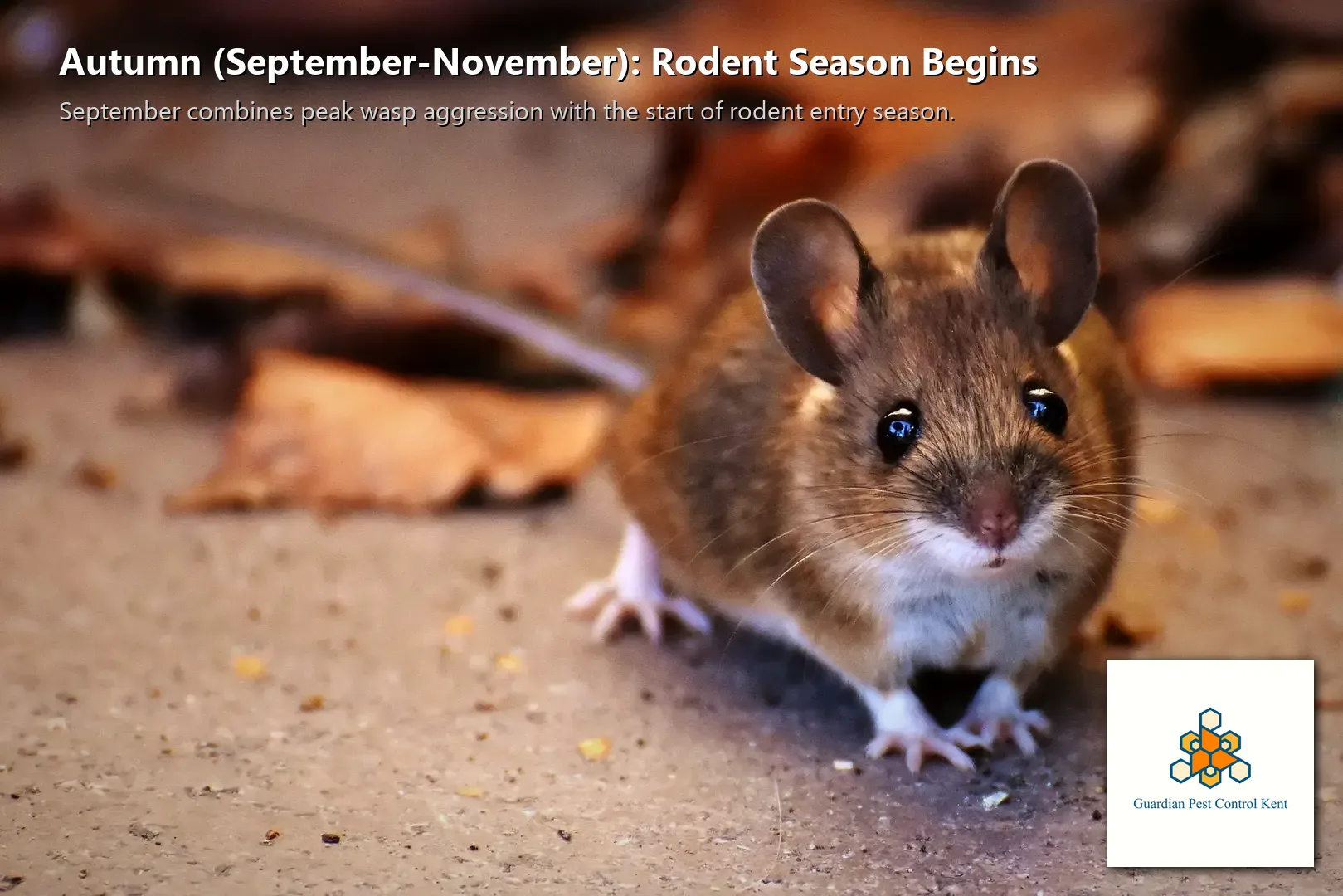
September combines peak wasp aggression with the start of rodent entry season - the two most serious pest concerns for Kent homeowners. Yellow jacket colonies reach maximum population in late August and begin aggressive defensive behaviour as colony food sources decline in September. At the same time, Norway rats and house mice increase entry attempts into residential structures as outdoor temperatures fall below 50°F at night.
Spider activity indoors also increases in September through October as male house spiders begin seeking mates. Washington State’s giant house spider (Eratigena atrica) - the large brown spider commonly found in Kent homes in autumn - is harmless to humans but an indicator of insect prey abundance in the home. A large number of spiders indoors suggests a secondary food source (flies, ants, or other insects) that warrants investigation.
The October perimeter treatment is the most strategically valuable single treatment of the year for South King County homes. Applied before first frost, it kills overwintering queen wasps, ants, and beetles at the foundation line, reducing spring populations of all three the following March.
Related services: Rodent Control Kent WA | Spider Control Kent WA
Winter (December–February): Year-Round Species Remain Active
The winter pest myth in western Washington
Many Kent homeowners discontinue pest control service in winter on the assumption that cold weather eliminates pest risk. This assumption is accurate in continental climates but not in the Puget Sound lowlands. Three pest categories remain fully active indoors in Kent homes from December through February:
- Norway rats and house mice - fully active year-round; peak indoor activity December–February
- German cockroaches - temperature-independent when established indoors; breed continuously at 70–80°F interior temperatures
- Overwintering spiders - giant house spiders and hobo spiders shelter in lower wall voids and crawl spaces
Maintaining quarterly treatment through winter keeps rodent bait stations active, prevents cockroach establishment in kitchen voids, and allows the pest control specialist to identify new entry points created by winter storm damage before spring population pressure exploits them.
When to Start a Pest Control Programme in Kent, WA
The best time to begin a quarterly pest control programme is March or early April - before the spring ant flush and before wasp queens have established new colonies. Starting treatment in spring gives the first full season of uninterrupted barrier protection and catches the highest-volume pest events (ant trailing, wasp establishment) before they require emergency response.
The second-best time to start is October - before the autumn rodent entry push. An October start secures rodent protection through the peak entry window and places the first interior inspection in the most pest-active period of the year for indoor species.
There is no bad time to start a programme. Pest populations present today will be larger in 30 days. Beginning treatment immediately and aligning to the quarterly schedule from the first visit is always preferable to waiting for a seasonal “start point.”
Frequently Asked Questions
Does Washington State have year-round pest problems?
Yes. Washington State’s mild oceanic climate in the Puget Sound lowlands prevents the sustained hard freezes that suppress pest populations in inland states. Ants, cockroaches, rodents, and spiders remain active in western Washington homes throughout the winter months. Pest pressure does drop from December to February but never reaches zero, particularly for interior-nesting species.
When is ant season in Kent, WA?
Ant season in Kent, WA peaks from April through July. Odorous house ants begin trailing indoors when soil temperatures reach 50°F, typically in late March. Carpenter ant swarming season runs from April to June. Activity declines from August onward but never stops entirely in western Washington due to the region’s mild winters.
When do wasps become a problem in Washington State?
Wasp colonies in Washington State grow from June through August, reaching peak size in late August and September when nests contain 3,000–5,000 workers. Yellow jackets become most aggressive in September when colony food sources diminish. Queen wasps emerge from hibernation in April to begin new colonies - treatment before July prevents colonies from reaching dangerous sizes.
When do rodents enter homes in Kent, WA?
Norway rats and house mice in Kent, WA increase indoor entry attempts from September through November as outdoor temperatures drop. The rodent season peak in western Washington runs September to February. However, rodents enter homes year-round - the autumn increase reflects outdoor population pressure rather than a true seasonal absence.
Is winter a good time for pest control treatment in Kent, WA?
Yes. Winter treatment in Kent, WA targets active rodent populations, cockroaches, and overwintering spiders. Perimeter insecticide treatments applied in winter also kill overwintering queen wasps, ants, and beetles before they reproduce in spring. Quarterly pest control programmes specifically include winter service visits to maintain barrier protection year-round.
What pests are most active in South King County in summer?
In South King County and the Kent area, summer pest pressure peaks with odorous house ants (May–July), carpenter ants (April–June), yellow jackets and bald-faced hornets (June–September), mosquitoes near Green River wetlands (June–August), and German cockroaches in commercial premises year-round. Rodent pressure remains constant throughout summer.
How often should a Kent, WA home be treated for pests?
Most Kent, WA homeowners benefit from a quarterly pest control programme - four treatments per year - which maintains a continuous chemical barrier and catches seasonal pest pressure before it builds to infestation level. Quarterly service costs $400–$800 per year and includes unlimited call-backs between scheduled visits.
Summary
Pest control season in Washington State does not end. The Puget Sound lowlands’ climate sustains year-round pest activity across rodents, insects, and arachnids. Timing treatment to seasonal peaks - spring for ants, summer for wasps, autumn for rodents - maximises prevention efficiency. A quarterly programme covers all four seasonal peaks with a continuous barrier.
Guardian Pest Control serves Kent, WA and the surrounding South King County area with WSDA-licensed residential pest control programmes. Call (304) 684-6328 to schedule a free seasonal assessment or book online. Service areas include Auburn, Renton, Federal Way, Burien, and Covington.
Sources
- NOAA National Centers for Environmental Information: noaa.gov
- WSU Extension - Integrated Pest Management: extension.wsu.edu
- King County Public Health - Vector Control: kingcounty.gov
- NPMA Pest Guide: npmapestworld.org