Factor 1: The Green River Valley’s Clay Soils and Moisture Retention
Factor 2: Pacific Northwest Rainfall - 38 Inches Per Year
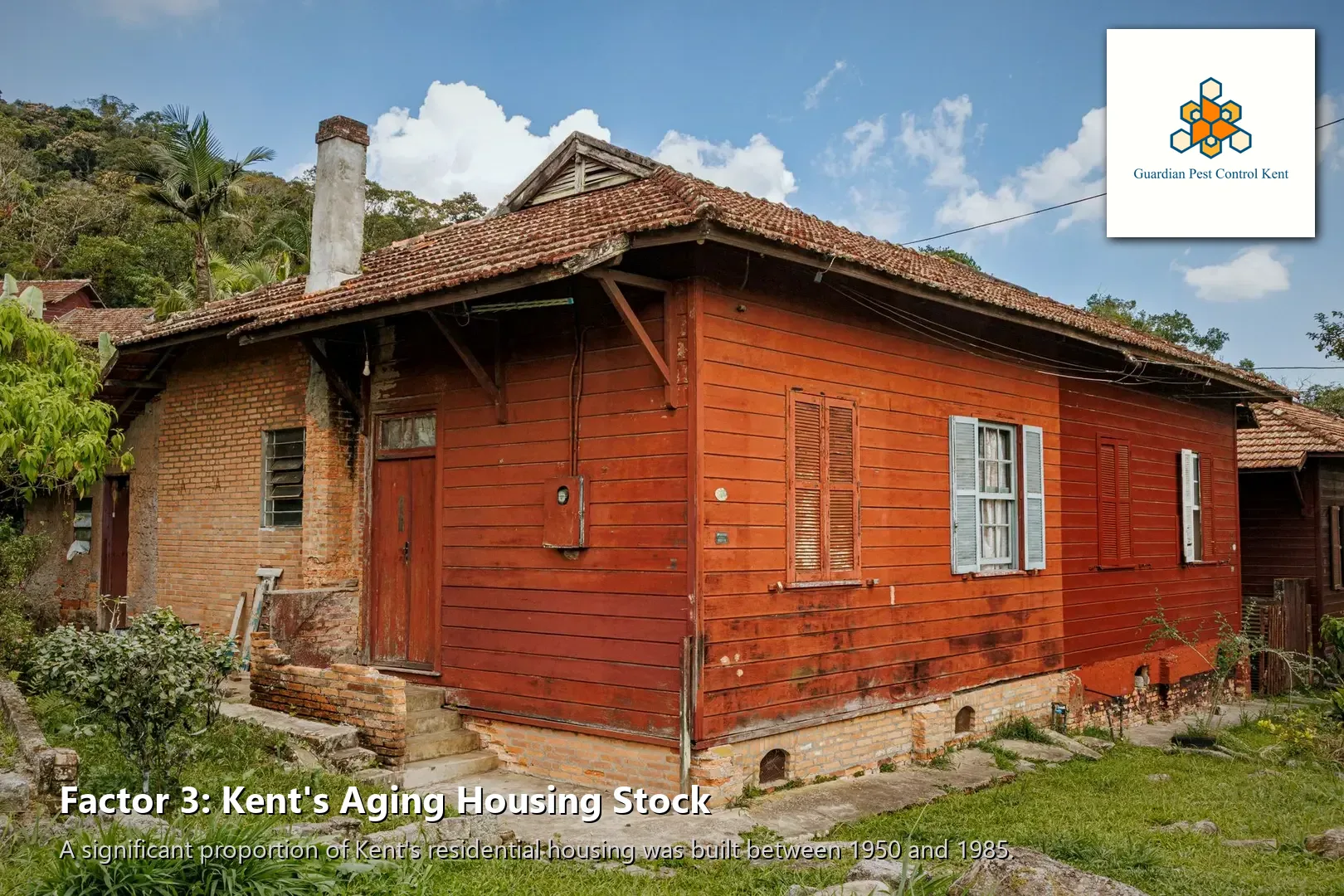
Factor 3: Kent’s Aging Housing Stock
Factor 4: The Green River Valley Industrial Corridor
Factor 5: Soos Creek Corridor and Lake Meridian
Seasonal Pest Risk Calendar for Kent, WA
| Month(s) | Primary pest pressure | Recommended action |
|---|---|---|
| January–February | Rodent pressure (indoor seeking dry shelter); German cockroaches (commercial) | Inspect and seal rodent entry points; confirm bait station activity |
| March–April | Termite swarmers; ant colonies activating; first rodent pressure as outdoor conditions warm | Schedule spring inspection; perimeter treatment ahead of ant season |
| May–June | Odorous house ants (peak); carpenter ants; mosquitoes beginning; first yellowjacket queens | Exterior gel bait + perimeter spray; mosquito treatment if near water |
| July–August | Yellowjackets (peak - colonies at maximum size); mosquitoes; ants | Nest identification and removal; ground nest treatment before colony expansion |
| September–October | Yellowjackets (aggressive foraging); rodents moving indoors; ground nests saturating | Autumn exclusion: seal all entry points before rodents seek winter shelter |
| November–December | Rodents (peak indoor pressure); spiders (indoor movement during cold); German cockroaches | Rodent monitoring; interior perimeter treatment; confirm exclusion work holds |
Which Neighbourhoods in Kent Have the Highest Pest Pressure?
Kent’s varied geography produces different pest risk profiles across its neighbourhoods:
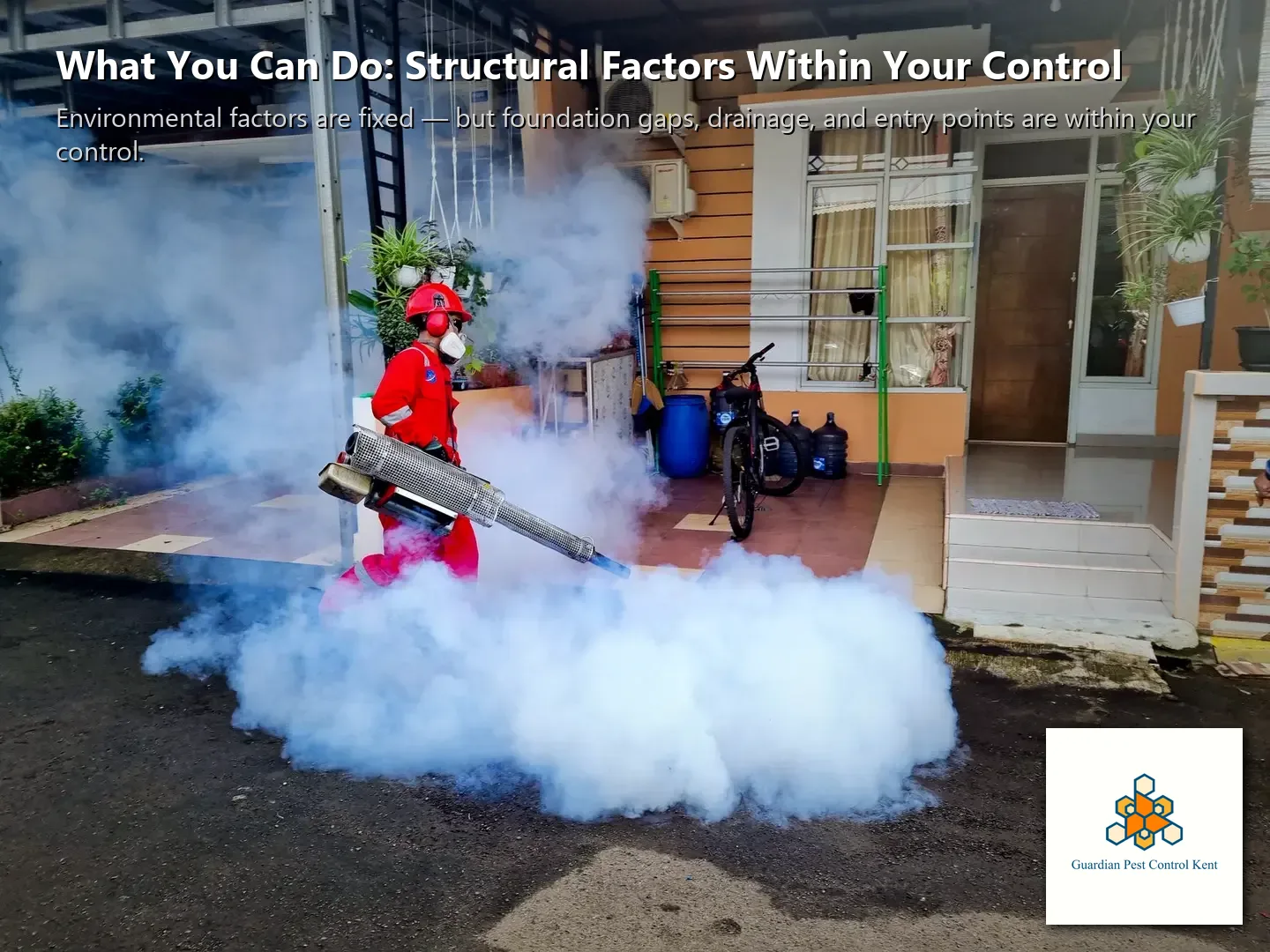
What You Can Do: Structural Factors Within Your Control
Environmental factors are fixed - you can’t change Kent’s rainfall, soils, or proximity to the industrial corridor. But structural factors are actionable:
- Crawl space vapor barrier: Intact vapor barriers reduce crawl space humidity significantly. Replace any damaged or absent barrier - this is the single highest-value structural pest prevention investment for Kent homes.
- Foundation vent screens: Replace any damaged or missing screens. Standard mesh should be ¼ inch or finer to exclude rodents.
- Pipe penetration sealing: Seal all gaps around utility penetrations through the sill plate, floor, and exterior walls. Steel wool packed into gaps followed by foam or caulk seal prevents rodent entry.
- Tree and shrub clearance: Remove branches touching the roof. Cut ground cover away from the foundation perimeter. Eliminate soil-to-wood contact at decking and fence posts.
- Firewood storage: Store firewood elevated and at least 20 feet from the structure. Ground-level firewood adjacent to the house is a Norway rat harborage and carpenter ant nesting site.
- Rubbish management: Lids on outdoor bins; bins stored away from the structure; no food waste in garden compost adjacent to the house.
For a detailed identification guide to every pest you might encounter in South King County, read: How to identify common household pests in South King County. For a complete breakdown of treatment costs for each pest type, read: How much does pest control cost in Kent, WA?
Guardian Pest Control: Built for Kent, WA’s Specific Pest Environment
Guardian Pest Control serves Kent and South King County. Our residential pest control programmes are designed for the specific pest pressures described in this guide - not generic national protocols applied to Pacific Northwest conditions. We understand the Green River Valley’s rodent dynamics, the Soos Creek corridor’s termite activity, and how wet-season rainfall affects treatment scheduling and product selection in our specific climate.
Free on-site estimate. Written inspection report. WSDA-licensed technicians. Programme pricing starting at $400/year for quarterly general pest coverage.
Frequently Asked Questions: Pest Vulnerability in Kent, WA
Why does Kent WA have more pest problems than other Washington cities?
Kent’s above-average pest pressure results from clay soils retaining moisture (supporting termites and ants), 38+ inches of annual rainfall degrading building envelopes and driving pests indoors, aging housing stock with more entry points, the industrial corridor supporting large Norway rat populations, and Soos Creek and Green River providing permanent moisture corridors for year-round pest activity.
Which Kent WA neighborhoods have the most pest problems?
Valley floor properties near the industrial corridor have highest Norway rat pressure. Downtown Kent has highest German cockroach density. East Hill properties with mature trees have highest roof rat and carpenter ant activity. Soos Creek corridor properties have elevated termite, wildlife, and mosquito pressure. Lake Meridian area sees higher seasonal mosquito pressure.
Do termites live in Kent WA?
Yes. Western subterranean termites (Reticulitermes hesperus) are active in Kent year-round. Clay soils retain moisture that supports large colonies. Homes with crawl spaces, wood-soil contact, or moisture-damaged timbers are at highest risk. Pacific Northwest termites remain active through winter - unlike termites in drier climates that slow seasonally.
Why are there so many rats near Kent WA’s industrial area?
The Kent valley industrial corridor generates the food waste, storm drain infrastructure, and harborage that supports large Norway rat populations. During population peaks, rats expand outward into adjacent residential neighbourhoods. Properties within half a mile of the valley industrial zone face measurably higher rodent pressure than those further on the hillsides.
How does rainfall affect pest infestations in Kent WA?
Kent’s 38+ inches of annual rainfall saturates clay soils against foundations (supporting termites and ants), degrades exterior pesticide residuals faster than drier climates, drives rodents and insects indoors during heavy rain periods, and saturates ground-based yellowjacket nests - forcing displaced colonies into wall voids and attic spaces in autumn.